Featured
Table of Contents
They provide a variety of functions for content management, partnership, and workflow management. Business CMS platforms are ideal for companies that need: Modification Scalability Security Extremely customizable Scalable and protected Incorporates with other business systems Supports massive content shipment Complex and costly Needs technical know-how Limited flexibility CMS Type Customization Scalability Flexibility Security Alleviate of Usage Standard CMS High High High Medium Medium Headless CMS High High High High Low Cloud CMS Medium High Medium High High Business CMS High High High High Low When picking a CMS, consider your site's particular needs and objectives.
When selecting a Material Management System (CMS), it is essential to discover one with features that fit your needs. Here are some essential functions to consider: The CMS ought to be simple to use, particularly for non-technical users. An easy user interface enables your group to create, edit, and handle material without requiring extensive technical knowledge.
This might include a drag-and-drop editor, personalized design templates, and assistance for numerous media formats like images and videos. The ability to personalize the CMS is essential. Search for one that supports plugins or modules, so you can add new functions and integrate with other systems as required. Your website requires to look great on all devices, consisting of mobile phones and tablets.
The CMS must support SEO best practices like custom URLs, meta descriptions, and sitemaps. A secure CMS with regular updates is necessary to protect against vulnerabilities and keep your website safe.
Look for a CMS with a strong community, substantial documents, and reliable support channels. Choosing the best hosting option and pricing design for your Content Management System (CMS) is crucial.
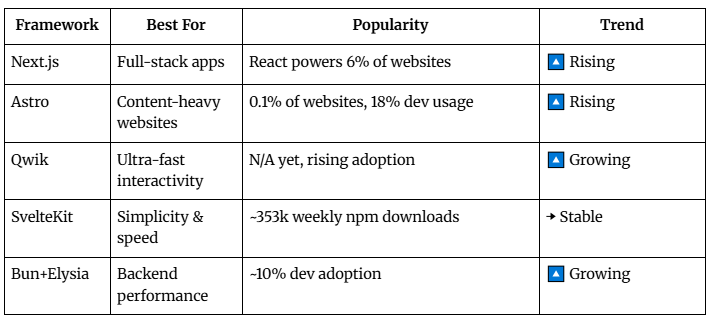
Top Modern Frameworks for Consider During 2026
Pros Cons Full control Requires technical skills and maintenance Modification choices Security and update duties Flexibility Greater costs for server maintenance Cloud-hosted CMS options are simple to utilize and scalable, making them ideal for small to medium-sized organizations. Your site is hosted on a remote server, and the company handles upkeep and updates.

Pros Cons Easy to use and scalable Minimal control over infrastructure and information Handled upkeep and updates Dependence on the supplier's infrastructure Affordable Security concerns Managed hosting for CMS platforms uses a balance in between self-hosting and cloud hosting. The company manages the technical aspects, while you keep control over your website's material and data.
Pros Cons Balance between control and managed maintenance Greater costs compared to cloud hosting Personalization choices Limited scalability Assistance and security Dependence on the provider's infrastructure When picking a CMS, consider the prices model. There are three typical alternatives:: A single payment for the CMS software.: Recurring payments for the CMS software application and assistance.
Why New PPC and Search Tactics Boost ROI
Select a rates design that fits your budget plan, company size, and needed level of assistance. Now that you understand what you need, it's time to research and discover the best CMS for your website. Here's how to do it: Start by looking at the main sites, documentation, and resources for each CMS platform.
Official sources offer the most precise and updated details. Look for online neighborhoods, online forums, and social media groups dedicated to each CMS. Here, you'll find real user feedback, tips, and insights. This can help you understand the pros and cons of each platform from individuals who actually use them. Numerous CMS platforms offer complimentary demonstration or trial versions.
They may have important insights and experiences to share about different CMS platforms. Look for case research studies or examples of sites built with each platform.
Compare their features, rates, user-friendliness, and scalability side-by-side to assist you make the best choice. CMS Choice Secret Includes Prices User-Friendliness Scalability Option 1 - Function 1 - Feature 2 - Function 3 Free/ Paid Plans Easy to utilize Manages development well Alternative 2 - Feature 1 - Feature 2 - Feature 4 One-time Cost Steeper learning curve Restricted scalability Choice 3 - Function 3 - Function 4 - Feature 5 Subscription Instinctive interface Extremely scalable It's time to choose the best CMS for your website.
Designing Responsive Digital Interfaces for 2026
Follow these steps to set up your CMS: 1. Set up the CMS on your server or hosting platform. Set up the database and connect it to the CMS.
Designing Intuitive User Journeys for PA ConsumersExport your content from the old CMS or site. Utilize a migration tool or plugin to transfer the material to the brand-new CMS. Review and edit the migrated content to ensure it's optimized for the brand-new CMS.
Designing Intuitive User Journeys for PA Consumers: Tailor the design, design, and functionality to match your brand.: Usage plugins and modules to extend the CMS's capabilities.: Optimize the CMS for search engines and mobile phones. Train your staff member on how to utilize the CMS successfully:: Supply detailed training sessions for material creators and administrators.
: Offer continuous support and training to guarantee users are comfortable with the CMS.: Encourage users to experiment and explore the CMS's functions. Routine upkeep is vital to keep your CMS protected, quickly, and enhanced: Maintenance Task Description Routinely update the CMS and its plugins to ensure you have the newest security patches.
Optimizing Search Visibility Through AI Trends
Monitor the CMS's performance and enhance it for speed and performance. In 2024, with many CMS choices offered, it's important to: Understand your website's needs Know the various CMS types Look for crucial functions that fit your requirements Consider hosting and pricing options Research and compare choices before making a last choice Step Description 1.
Know CMS Types Check out traditional, headless, cloud, and enterprise CMS platforms to find the finest fit for your requirements. Look for Key Features Prioritize an easy to use user interface, content modifying tools, customization alternatives, mobile responsiveness, SEO support, security, and community support. Consider Hosting and Pricing Evaluate self-hosted, cloud-hosted, and handled hosting alternatives, as well as prices models like one-time fees, subscriptions, or freemium strategies.

Latest Posts
Navigating New Future Landscape of AEO
Maximizing Search ROI Through Advanced AEO Tactics
Building Future-Proof SEO Frameworks for 2026